
Choosing between a boarding school and a day school is a major decision for parents. Both options offer quality education but come with very different environments and experiences. Especially for parents in regions like Punjab, Haryana, Himachal Pradesh, Chandigarh, and Ladakh, understanding the differences can help determine which is the right fit. In this comprehensive guide, we’ll compare boarding school vs day school in terms of academics, facilities, discipline, social and emotional development, extracurricular exposure, and coaching support. We’ll highlight the benefits of each, the residential school advantages, and why a CBSE boarding school might subtly edge out for holistic growth. By the end, you should have a clearer idea of which is right for your child – with a special look at how Career Point Gurukul’s residential model in Punjab stands out.
Understanding the Key Differences
Before diving into detailed comparisons, let’s clarify what sets these two school types apart:
- Boarding School: Students live on campus in hostels or dormitories and attend school there. It’s a residential school environment – classes, meals, study time, and extracurriculars all take place under supervision on the school campus. Students typically stay for the full term (with scheduled holidays) and experience a 24/7 school community life. In other words, the school becomes a “home away from home.”
- Day School: Students attend academic classes during the day and then return home in the afternoon/evening. All schooling (academic and co-curricular activities) happens during the school hours, after which family life resumes. Parents are more involved in the daily routine, and children get to be at home each night
The decision isn’t about choosing a “better” option universally, but about which environment suits your child’s needs. Let’s compare the two across critical factors that parents often consider.
Academic Environment and Curriculum Quality

One of the first considerations is academics. Both boarding and day schools can offer excellent education, especially if they are affiliated with reputable boards like CBSE (Central Board of Secondary Education). However, the learning environment differs:
Boarding Schools: Boarding schools provide a highly immersive educational experience. Living on campus means students have access to academic resources around the clock – from libraries and computer labs to study groups and tutoring sessions. For example, students can consult teachers or tutors even after regular class hours, perhaps during evening study hall. Many boarding schools attract experienced, top-quality faculty who often stay on campus and are available to mentor students beyond the classroom. The result is a comprehensive learning environment where academics don’t stop when the last bell rings. Studies often indicate that boarders develop strong study habits due to supervised prep time in the evenings and a structured schedule focused on learning.
Day Schools: Day school students typically follow a standard schedule – classes in the morning and early afternoon, then head home. They receive the same classroom instruction during the day as boarders, but access to teachers or school facilities after hours is limited. If a student has doubts or needs extra help, they might have to wait until the next day or seek outside tutoring. On the plus side, after school, day students can study at home with parental guidance or attend local coaching classes if needed. The academic experience in a day school can be excellent during school hours, but it’s more compact, and academic support outside those hours depends on parents or external resources.
CBSE Curriculum Advantage: Whether boarding or day, choosing a CBSE-affiliated school offers benefits of a standardized, rigorous curriculum recognized across India. CBSE schools focus on conceptual understanding and are aligned with national competitive exams. A CBSE boarding school, however, gives the added benefit of that strong curriculum delivered in an environment where students can fully focus on studies without daily home distractions. This combination often leads to better academic consistency. In fact, boarding schools often ensure students don’t miss out on essential school studies while preparing for exams, by seamlessly integrating the school curriculum with additional coaching as needed
Discipline and Daily Routine
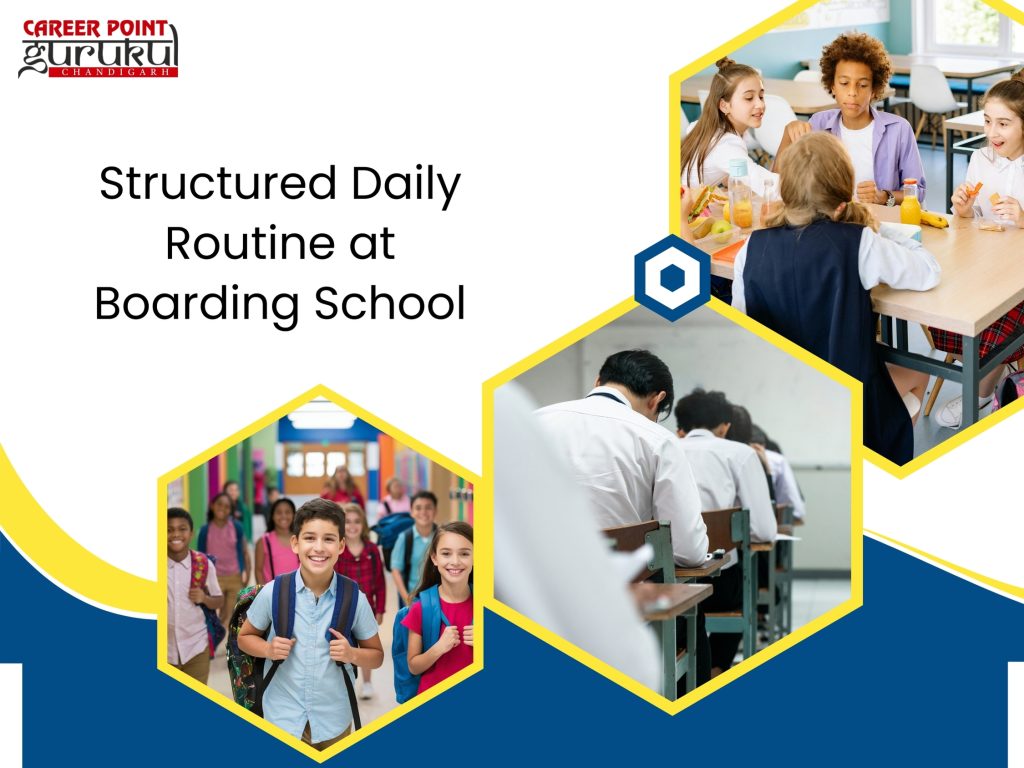
Discipline is a hallmark of boarding schools, but it’s important in day schools as well. The difference lies in how routine is enforced and experienced by the student:
- Boarding Schools: A boarding school’s residential nature means there is a structured timetable from dawn to dusk. Wake-up calls, morning physical exercise or assemblies, classes, afternoon activities, evening prep, lights-out – every hour is often accounted for. This structured routine instills strong self-discipline and time management in students Children learn to follow a schedule and take responsibility for being on time and prepared. Over time, what may feel strict initially actually helps students develop self-control and punctuality, traits that benefit them in higher studies and careers. Boarding students also learn to manage daily tasks themselves (like keeping their room tidy or doing laundry), which fosters maturity. As one observer humorously noted, from doing laundry without turning all their socks pink to managing their own schedule, boarding students quickly learn to handle themselves like mini-adults. The disciplined routine can be intensive, but it creates productive habits. (A minor downside is that the highly regimented schedule leaves little room for spontaneous activities or “downtime” compared to a non-boarding environment – some students may initially find the rules challenging to adjust to
- Day Schools: Discipline in day schools is usually enforced during school hours (class timings, homework deadlines, etc.), but once home, it’s largely up to parents and the students how they structure their time. After school, day students have more unstructured time. This flexibility can be a boon for children who manage time well or have other interests, but it can also lead to procrastination or distractions if not monitored. In a day school, a student might spend the evening on homework or might be tempted by TV, games, or outings – it depends on the child’s self-discipline and parental guidance. The advantage is that there’s room for the child’s own routine (they can decide to study late at night or early morning as per their style, for instance). However, not all students have the maturity to utilize that freedom productively in middle and high school. Parents often have to enforce a routine at home to ensure consistency. In summary, day schools offer more flexibility in routine, which can be good or bad: children may enjoy more personal time, but they might not develop the same level of regimented habits unless guided. Families need to create their own structure to mimic the discipline a boarding environment would naturally provide.
Facilities and Infrastructure
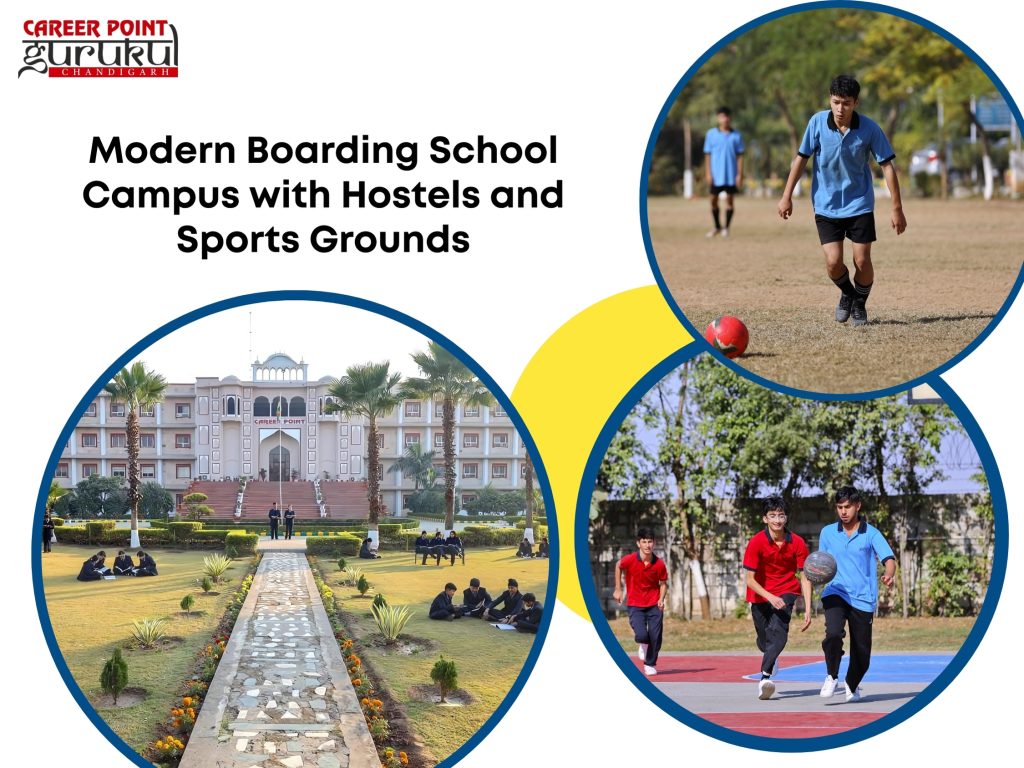
Boarding school campuses often boast expansive grounds and modern facilities, creating an environment where students can learn, live, and play in one place.
When comparing facilities, boarding schools usually have an edge due to their larger residential campuses, though top day schools also invest in infrastructure:
- Boarding Schools: Because students live on campus, boarding schools typically offer comprehensive facilities on-site. Classrooms, science and computer laboratories, libraries, and lecture halls are just the beginning. A good boarding campus will also have sports fields, courts, swimming pools, auditoriums, music and art studios, and more – essentially, everything a student needs for academics and recreation in one place. Hostels are often well-equipped with modern amenities. For example, Career Point Gurukul’s campus in Mohali (Punjab) is spread over 15 acres of lush green area and designed to take care of all aspects of a student’s life. They provide comfortable AC hostel rooms (often twin-sharing with attached bathrooms), separate hostels or floors for boys and girls, 24×7 electricity backup, and even conveniences like on-campus laundry services and a tuck shop. Additionally, 24×7 security with guards and CCTV surveillance ensures a safe environment Boarding students thus benefit from a self-contained “mini-city” of sorts – they can go from classroom to sports field to dining hall to dormitory, all within a secure campus. This availability of resources means they can, say, practice basketball in the evening, use the library at night, or work on a science project in the lab on a weekend. The infrastructure is geared for all-round development, not just academics.
- Day Schools: Many day schools, especially in urban areas, have good infrastructure too, but they might be relatively limited in scope or accessibility. Day schools usually have the essential academic facilities – classrooms, labs, libraries, maybe a playground or multipurpose hall. However, because students aren’t on campus beyond the afternoon, facilities like libraries or labs may not be open for use late in the day. Some day schools in cities may have space constraints, meaning fewer sports facilities or green areas. Boarding schools often can invest in larger facilities (fields, auditoriums, etc.) that day schools may lackThat said, top-tier day schools, especially in smaller towns or suburbs, do offer extensive facilities too, but students use them only during school hours or scheduled after-school activities. If a day school lacks a certain facility (say, a swimming pool or a specialized sports coach), students might have to access those outside (e.g., join a city sports club). In contrast, a boarding school would provide those within the campus. In short, day schools may offer great infrastructure for academics, but boarding schools often provide a more diverse range of facilities by virtue of being residential campuses.
Extracurricular Activities and Holistic Development
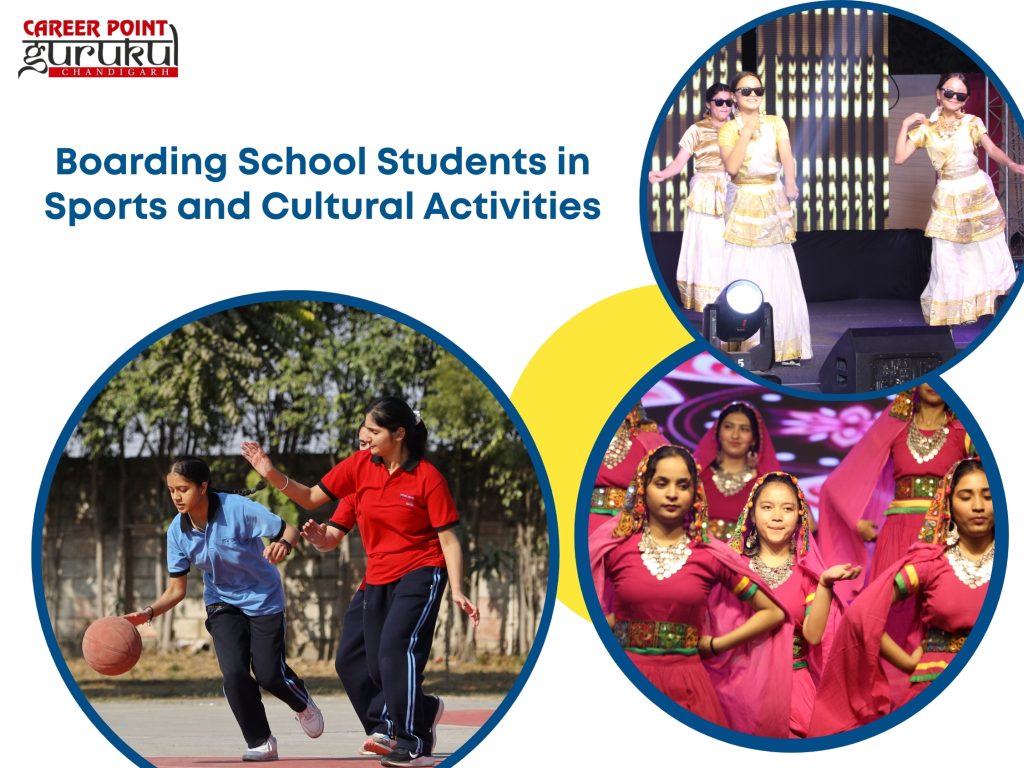
Academic learning alone isn’t enough for modern education – holistic development through sports, arts, and other extracurriculars is crucial. Here’s how boarding vs day schools stack up:
Boarding Schools: Boarding schools are known for their rich extracurricular programs. Since students live on campus, the school can schedule activities in the late afternoons, evenings, and even weekends. This means a wider range of activities is often available to boarding students. Sports such as football, basketball, cricket, athletics, swimming, and badminton are commonly offered with proper coaching – and students have daily time slots to practice. Facilities for these sports are on campus (as mentioned, many have their own fields, courts, gyms, and pools). Beyond sports, boarding schools usually have clubs and programs for music, dance, theater, debate, science, robotics, etc. Students can participate in school plays, competitions, and hobby clubs without worrying about commuting home late. The immersive environment encourages students to try new things – whether it’s learning an instrument in the school music room in the evening or attending a yoga session early morning. Because peers are around all day, it’s easier to organize team practices or group activities. Overall, boarding schools excel at providing opportunities for all-round development, making it convenient for students to balance academics and extracurriculars within their daily schedule. A student might finish classes, have a short rest, then head to basketball practice at 5 PM, followed by dinner and then study hours – all orchestrated in a smooth flow. This level of structured extracurricular exposure can instill lifelong passions and skills in students.
Day Schools: Day schools also offer extracurricular activities, but these are usually confined to certain periods (like PT periods, after-school clubs on specific days, or annual events). Day students have to manage extracurriculars within a tighter timeframe. For instance, if classes end at 3 PM, a school might hold club meetings or sports practice till 4 or 5 PM, after which students go home. While many day schools do have sports teams and cultural clubs, the engagement might not be as intensive simply due to time constraints – students need to leave for home before evening. On the plus side, day scholars often have the flexibility to pursue activities outside of school. If a student is passionate about something not offered at school (say, horse riding or a specialized music class), they can join external classes in the evenings or weekends since they’re home and free to travel. This is a flexibility boarding students typically don’t have (boarders can’t easily leave campus to attend a class in town). So, day school can be beneficial for students with niche interests or commitments (for example, training at a city sports club or learning from a private tutor). However, juggling outside activities with school can be challenging and often requires parent coordination. In summary, day schools provide breadth and flexibility in extracurriculars, but boarding schools provide depth and ease of participation. If your priority is a well-rounded experience with maximum school-led activities (and convenience in attending them), a boarding environment shines. If you prefer to customize your child’s extracurriculars (picking and choosing outside the school’s offerings), a day school might give the needed flexibility.
Social Life and Peer Community
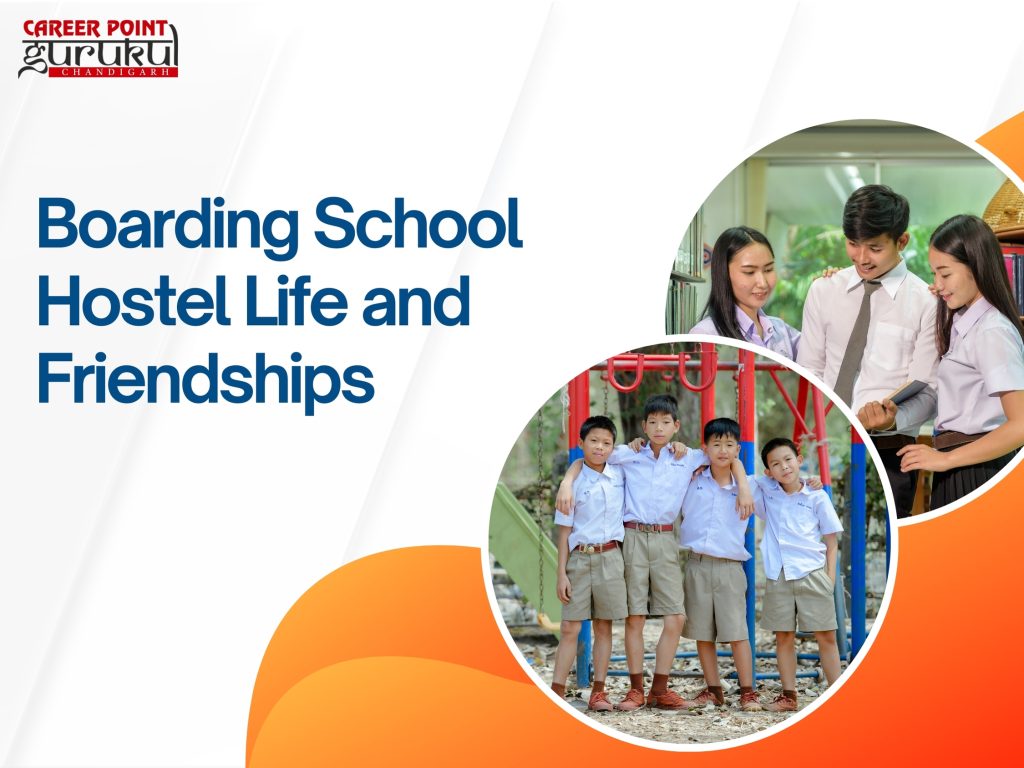
Children grow not just through books and classes, but also through interactions with peers. The social development aspect is a significant differentiator between boarding and day schools:
- Boarding Schools: In a boarding school, social life is a 24/7 affair. Students live together in dorms, share meals, attend classes, and participate in activities as one community. This constant interaction often creates a strong sense of community and camaraderie. among boarding students. Your classmates are also your roommates, teammates, and essentially your family at school. Such an environment can help students develop deep friendships that often last a lifetime. They learn to live in harmony with others, resolve conflicts, and support each other through ups and downs. Group projects might continue into late-night study sessions in the dorm, and birthdays might be celebrated with dorm-mates at midnight. This immersion fosters teamwork, empathy, and communication skills. Another aspect is diversity – many boarding schools attract students from various cities, states, or even countries. This exposes your child to different cultures and perspectives, broadening their horizons in a way local day schools might not. However, the flip side is that being away from family means the school community essentially replaces daily family time. For most, this leads to a “second family” bond with friends and dorm parents; for some, it might feel overwhelming initially. Overall, boarders tend to become very socially adept, learning to navigate life with peers constantly around. Living together also teaches compromise and cooperation in a way commuting students might not experience until college.
- Day Schools: In day schools, students also form close friendships, but their interaction with peers is mostly limited to school hours and perhaps planned outings or study sessions. Kids in day school typically spend a big chunk of time with family at home, so their social experience is split between school friends and family. The peer bonding in day schools, while strong, may not be as intense as in boarding schools simply because after the last bell, everyone goes their separate ways. There’s usually more parental influence on a day student’s social life (parents might decide which friends to invite over, or how much time the child can spend out with friends). Day school students often socialize through phone, social media, or occasional meetups at malls or each other’s houses after school. They might have school friends and also neighborhood friends. One benefit is that family and community involvement remains high – children may engage with relatives, local festivals, and community events more regularly, giving them a different social grounding. Day schools can also have diverse student bodies, especially in metropolitan areas or schools that draw students from all over the city. But typically, the strongest social advantage of day school is maintaining a daily family connection while still making friends at school, whereas boarding school’s advantage is forging very tight-knit friendships and independence from family. Some families value that their child comes home to them every day, preserving family bonds and values on a daily basis; others value that their child learns to socialize independently in a boarding setup. It really depends on what social environment you want your child immersed in.
Emotional Growth and Independence
Closely tied to social development is the question of emotional well-being. How does each school type impact a child’s personal growth, maturity, and emotional resilience?
- Boarding Schools: Attending a boarding school can catalyze significant emotional growth and independence in a child. Because students live apart from their parents, they inevitably face challenges like homesickness, managing personal needs, and making decisions daily on their own. In the short term, many boarding students experience homesickness and loneliness at first, which can be challenging. However, with proper support from the school (caring dorm mentors, counselors, and encouraging friends), students learn to overcome these feelings. In doing so, they often develop resilience and self-reliance. Over time, a child realizes they can handle life’s ups and downs without always relying on parents, which builds confidence. Boarding schools also intentionally foster these life skills: students are encouraged to solve their own problems, whether it’s cleaning up their space, mediating a disagreement with a peer, or coping with a tough exam result. They learn responsibility because there’s no running away from tasks – if laundry needs to be done or homework needs to be completed, they must take charge. This environment, while supportive, doesn’t pamper them as much as home might, which can be very good for developing maturity. In fact, many students find that boarding school transforms them into disciplined, confident young adults ready for college life. Research has noted that overcoming the initial emotional challenge of leaving home can promote lasting confidence and resilience in students. Moreover, boarding schools today are quite aware of the emotional needs of children – they have counselors and mentorship programs to ensure students are nurtured emotionally. Regular group activities, the presence of dorm parents/wardens, and a structured routine all provide a safety net that gradually makes the campus feel like a second home. In short, boarding schools provide a nurturing yet challenging environment that, when balanced well, produces emotionally strong, independent individuals
- Day Schools: Students in day schools typically have the comfort of returning to their parents and home every day, which can be emotionally reassuring. This means they might not face the intense early challenge of homesickness that boarders do – day students generally experience less homesickness by default. They have the daily emotional support of family: if something goes wrong at school, they can talk it out with mom or dad in the evening. This daily family interaction can be crucial for some children’s emotional stability. Additionally, day students get a break from the school environment every day, which can reduce stress for some – home can be a safe haven where they can relax. However, one could argue that day students may depend more on parents for problem-solving and might not develop certain life skills as early. Since parents handle chores like cooking, cleaning, and often even time management (“Do your homework now!”), a day student may not practice independence until later in life. They might be less exposed to learning self-management because there’s always a guardian around. This is not to say day students cannot be independent – many are – but the environment doesn’t mandate it the way boarding does. In terms of emotional resilience, day students might have a slower, steadier curve – they face challenges too, but often with parents as immediate counselors. Emotional growth in day school happens under the close guidance of family, which can be a pro or con depending on your perspective. If a child is very sensitive or not ready to be away from home, the day school route might spare them stress and allow them to mature at their own pace. On the other hand, if a child is relatively adaptable, they might not be stretching their wings as much as they could in a boarding scenario. It truly depends on the child’s temperament and the support system at home vs. the potential growth opportunities at boarding.
Coaching and Competitive Exam Preparation (NEET/IIT-JEE)

For parents of students in classes 6–12 in India, a big question is: which setup is better for competitive exam preparation (like NEET for medical or IIT-JEE for engineering)? Nowadays, simply attending school isn’t enough for these tough exams – students often need coaching. Here’s how boarding and day schools compare in this context:
- Boarding Schools (Integrated Coaching): A major advantage of some residential schools – such as Career Point Gurukul and other modern Gurukul-style schools – is that they offer integrated coaching programs for entrance exams along with regular schooling. In these schools, the school curriculum and the JEE/NEET syllabus are seamlessly integrated. This means the school’s timetable is designed to cover both Board exam academics (e.g., CBSE syllabus) and the additional topics and depth needed for IIT-JEE or NEET, all in one schedule. Expert faculty (often drawn from top coaching hubs like Kota) are brought on campus so that students don’t have to go out for separate coaching. The benefits are huge: Students save time and energy because they don’t need to commute to coaching centers every day after school. In a traditional setting, many day scholars spend hours traveling between school, coaching classes, and home, which can be exhausting and stressful. In a residential integrated program, that wasted commute time is eliminated – instead, students use it for extra classes, self-study, or rest. The integrated approach also ensures that what’s taught in school and coaching is synchronized; for example, if a student learns a concept in Physics in class, the coaching sessions will reinforce it for competitive exams, ensuring no overlap or conflict in teaching methods. This alignment helps students grasp concepts better by seeing their practical applications and advanced problems alongside school theory. Furthermore, residential coaching schools maintain rigorous testing schedules (weekly tests, mock exams) in a controlled environment, which keeps students on their toes and exam-ready. There’s also the advantage of having mentors around 24/7 – if a doubt arises while self-studying in the hostel at night, teachers or peers are nearby to discuss. Overall, if your child is aiming for top competitive exams, a boarding school with integrated coaching can be a game-changer, providing a focused, stress-free preparation environment. Career Point Gurukul, for instance, emphasizes how its school-synchronized coaching system in a closed campus leads to high results by removing distractions and keeping students energized and focused on one campus.
- Day Schools (Separate Coaching): In a day school scenario, especially in classes 9–12, it’s very common for students to enroll in external coaching classes for NEET, JEE, or other competitive exams. This means a student attends the regular school in the morning (which covers the board curriculum) and then heads to a coaching institute for 2–4 hours of specialized preparation in the evening. Many students manage to succeed through this route, but it does demand excellent time management and stamina. The challenge for day scholars is balancing school, coaching, homework, and rest within the same 24 hours. Often, by the time they get home from coaching, it’s late in the evening, leaving just a bit of time for school homework or revision, then sleep – and the cycle repeats. This can be stressful and physically tiring over two crucial years (11th and 12th). Additionally, if the school and coaching are not coordinated, students might end up with conflicts (e.g., school teachers and coaching teachers teaching different chapters at the same time, causing confusion or one racing far ahead of the other). Students themselves have to integrate the syllabi, which can be overwhelming. On the plus side, attending an external coaching center allows exposure to a wider competition (many bright students from various schools converge there), which can be motivating. Day school students also have the option to choose their coaching institute (some might prefer a famous coaching center in another city or online coaching). However, one cannot deny the time lost in commuting and the energy drain it causes. Parents of day schoolers often try to alleviate this by either moving closer to coaching centers or opting for day-boarding schools that keep students until evening for coaching (a hybrid model). In summary, day school plus separate coaching can work well but demands a lot of discipline and travel, whereas boarding with integrated coaching streamlines the process significantly. If your child is very focused on cracking exams like IIT-JEE or NEET, you may lean towards solutions like a residential school where school and coaching happen together for maximum efficiency.
Safety, Security and Pastoral Care
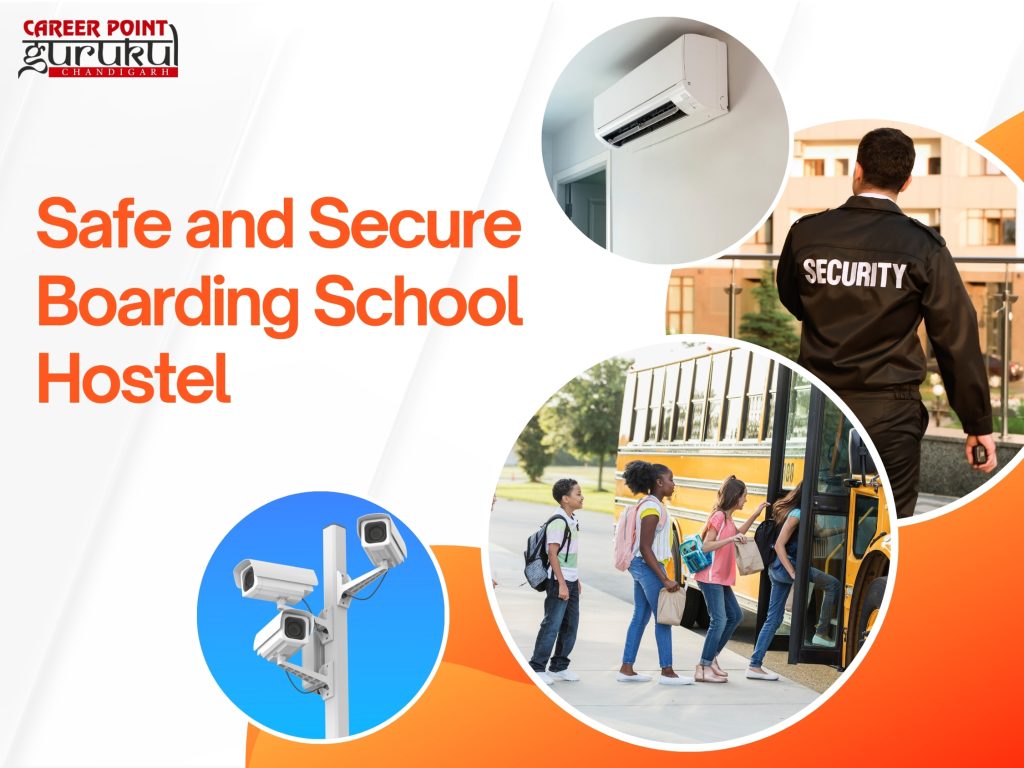
Every parent’s top priority is their child’s safety and well-being. Let’s address how each schooling option provides for safety and student welfare:
- Boarding Schools: Good boarding schools maintain a high level of safety and pastoral care because they are responsible for students round the clock. Campuses are typically secure, often gated with security personnel at entries. As mentioned, many have 24/7 security guards, CCTV cameras, and strict sign-in/out policies to ensure students are safe at all times. Beyond just physical security, boarding schools have staff like dorm parents, residential tutors, or wardens who look after the students’ daily needs. These are adults on campus whom students can approach for any personal issues or guidance, effectively acting as mentors or guardians. In terms of healthcare, most boarding schools have a medical center or infirmary with nurses (and doctors on call) to handle any illness or emergency promptly. Separation of boys’ and girls’ housing is standard, with supervised access to ensure a comfortable environment for all. For instance, schools often have separate hostel buildings or floors for boys and girls, with controlled access, and even separate mess facilities for dining as needed. The schedules are designed to keep students engaged in productive activities, minimizing idle time that could lead to mischief. The concept of in loco parentis (in place of the parent) is taken seriously – the school’s staff takes on the role of caring for the child’s emotional and physical needs. This includes counseling services for emotional issues, as modern boarding schools employ counselors and conduct workshops on stress management and self-care to support students’ mental health. Additionally, rules are in place (for example, restricted outings, curfews, supervised internet access, anti-bullying measures) to create a safe and positive environment. While no place is 100% risk-free, boarding schools today advertise a very safe, monitored setting for children, often much more controlled than a child’s daily unsupervised time in a day school scenario. Parents can usually stay in touch with school staff to get updates on their child’s well-being. Career Point Gurukul, for example, highlights its closed campus with 24-hour monitoring to ensure minimal distractions and no bad habits – meaning they keep a close eye on students’ activities to guide them on the right path. This kind of vigilance is reassuring when you’re entrusting your child to a residential institute.
- Day Schools: In day schools, safety protocols exist too but in a different context. During school hours, reputable day schools have secure campuses with entry-exit registers, security guards, perhaps CCTV in corridors, and teachers supervising the premises. Many schools now implement strict ID systems for pick-up (especially for younger kids) and have anti-bullying policies. However, once the child leaves the school for the day, safety is back in the parents’ domain. The commute to and from school can be a safety factor – parents have to ensure safe transport or accompany the child. At home, it’s the family’s responsibility to provide a secure environment. Day scholars arguably face more exposure to the outside world on a daily basis – which can be both good and bad. They might be traveling on public transport, walking through neighborhoods, etc., where parental oversight is needed for safety. Additionally, day students potentially have more unsupervised time (if both parents are working, a teenager might be alone at home for a while after school). This requires trust and discipline to ensure they use that time safely and wisely. In terms of pastoral care, day schools have counsellors and teachers to support students too, but a child or parent typically needs to proactively seek them during school hours if something is wrong. The close guidance a boarder receives from house parents is not present; instead, the parent at home plays that role. The advantage here is that parents remain the primary influencers daily, which some prefer – they can directly monitor the child’s emotional state each evening and step in if something seems off. Overall, day schools provide a safe environment during the day, but rely on parents for after-school safety and care. For many parents, this is manageable and preferred; for others, especially those in areas with long commutes or fewer supervision options at home, a boarding school’s constant care can actually feel safer and more structured.
Cost Considerations and Value

While not a learning factor, cost is an important practical consideration for many families:
- Boarding School Costs: Boarding schools generally are more expensive than day schools. The fees include not just tuition, but also boarding and lodging (hostel accommodation, food), and often additional services like laundry, security, and extracurricular facilities maintenance. There’s a premium for having your child live on campus with full-time supervision. For example, if a quality day school costs X per year, a comparable boarding school might cost 2X or more per year when you factor in all living expenses. Some boarding schools, especially elite ones, can be quite costly. However, when evaluating value, consider that boarding fees cover almost all needs of the child – education, meals, housing, coaching (if integrated), and 24/7 care. For parents who might otherwise spend on separate coaching classes, tutors, daycare, transport, etc., boarding consolidates those costs. There’s also the intangible value of the environment and opportunities provided. Many parents see boarding school as an investment in their child’s future, given the holistic development and potentially better academic focus.
- Day School Costs: Day schools are relatively affordable (apart from some high-end private day schools which can also be pricey, though still less than boarding). You typically pay only the tuition and perhaps transportation if using school bus, plus any miscellaneous fees (books, uniforms, etc.). The family still covers the child’s living expenses at home, but those expenses are part of normal household spending. Importantly, if you plan to use external coaching for exams, that cost will be on top of the day school fees. Even so, for many families, day schooling is economically feasible whereas boarding might be out of budget. There are also day-boarding schools (extended hours but not overnight) as a middle path in some cases, offering some extra study time and an extra meal for a moderate incremental cost. When considering value, a day school is effective if the home support system is strong – you save money and can allocate resources to specific needs (like hiring a tutor for a subject if needed or investing in a hobby the child has). With boarding, you’re paying a bulk amount for an all-inclusive experience. Families must weigh if the additional benefits of boarding justify the cost for them. If the child greatly benefits from the structured environment and opportunities, the value could well exceed the cost. On the other hand, if a family can provide a rich learning environment at home (perhaps a parent who is an educator, or excellent local opportunities), then day school plus home support might be cost-effective and educationally effective.
In summary, day schools are easier on the pocket, while boarding schools require a larger financial commitment. It’s crucial to ensure that whichever choice, the child makes the most of the resources available, thereby delivering value for the money spent.
Conclusion: Making the Right Choice for Your Child
Ultimately, the “boarding school vs day school” decision comes down to your child’s personality, your family situation, and your long-term goals. Both options have their pros and cons, and what works for one family might not work for another.
If you prioritize a structured environment, holistic growth, and integrated preparation for competitive exams, a boarding school could be the right choice. The benefits of boarding school include round-the-clock learning, character-building discipline, broader extracurricular exposure, and early independence. Students often emerge from good boarding schools as well-rounded, confident individuals ready to tackle college life and beyond. This is especially true if your child is in higher classes aiming for IIT-JEE, NEET, or other competitive exams – the synergy of a residential school with coaching can give them an edge.
On the other hand, if you feel your child isn’t ready to be away from home, or you want to be closely involved in their daily routine, a day school might be better. The benefits of day school – more family time, lower cost, and flexibility to pursue outside interests – are significant. Some children thrive best under a parent’s daily guidance and in the comfort of home after the school day. They might also have local opportunities (like a music guru or a sports academy) that are easier to attend as a day scholar.
For many families in North India (Punjab, Haryana, Himachal, Chandigarh, Ladakh), there’s a strong desire to find the best residential school in India that fits their needs. If you are leaning towards the residential model, it’s important to choose a school that not only has excellent academics and results but also aligns with your child’s temperament and your values. Visit campuses if possible, talk to administrators, and get feedback from current students/parents.
Career Point Gurukul, Mohali (Punjab) is one example of a modern boarding school that has been designed to offer the best of both worlds – a CBSE-affiliated education combined with professional coaching for competitive exams, all within a nurturing residential campus. It has quickly emerged as a leading option in the region, especially for parents who want a holistic residential school in Punjab with a proven academic track record. The school offers a safe, disciplined environment with all facilities on-site, and emphasizes not just rote learning but overall personality development. If you’re considering a boarding school for your child in the Punjab or nearby region, it’s worth exploring CP Gurukul as a place where your child can grow academically, prepare for NEET/IIT under expert guidance, and develop life skills in a supportive community.
In conclusion, weigh the factors that matter most to you – be it academics, coaching, safety, cost, or emotional comfort. Both boarding and day schools can set your child on the path to success, but the right choice will ensure they are happy and thriving while getting there. Whatever you choose, stay involved in your child’s education journey and support them in making the most of their school years.
Frequently Asked Questions (FAQs)
Q: What is the main difference between a boarding school and a day school?
A: The main difference lies in the living arrangement. Boarding school students live on campus in hostels and are supervised by the school staff day and night, whereas day school students go home every day after classes. This means boarding school provides a 24/7 school environment (academic, extracurricular, and pastoral care all the time), while day school involves school during the day and home life in the evenings.
Q: Which is better for academics, boarding or day school?
A: Both can offer excellent academics, but a boarding school provides a more immersive academic environment. Boarders have access to teachers, libraries, and study groups even after regular school hours, and many boarding schools hire highly qualified faculty dedicated to student success. Day schools offer quality classroom teaching too, but after school, students might need to manage on their own or seek tuitions. The better option depends on the student’s needs: if they benefit from structured after-school study and extra help, a boarding school has an edge. If they are disciplined enough to study at home (or have good support at home), a day school can work just as well academically.
Q: Do boarding schools really help with IIT-JEE/NEET preparation?
A: Yes, many boarding schools now integrate competitive exam coaching into their curriculum. For example, some CBSE boarding schools have tie-ups with expert coaching institutes and align their schedule so that students prepare for board exams and IIT-JEE/NEET simultaneously on campus. This integrated approach saves time (no commuting to coaching centers) and ensures students don’t neglect either Boards or entrance prep. Career Point Gurukul in Mohali is one such school where IIT-JEE/NEET coaching is part of the school program, so students get the benefit of expert coaching without leaving the campus. In contrast, day school students often have to attend separate coaching classes outside school hours, which can be tiring. So, if exam preparation is a priority, a boarding school with an integrated coaching program can be a smart choice.
Q: What about safety – are boarding schools safe for my child?
A: Reputable boarding schools take student safety very seriously. They have secure campuses with 24/7 security guards, CCTV surveillance, and strict rules for visitors and outings. Students are supervised by staff (such as dorm parents or wardens), and there are usually infirmaries and nurses for healthcare. The environment is controlled – students can’t leave campus without permission, and activities are monitored, which actually minimizes exposure to outside risks. In addition, the school provides pastoral care: there are mentors and counselors to address any emotional or personal issues. While it’s natural to worry when your child is away, boarding schools essentially act in loco parentis, meaning they take on the responsibility of care and safety as a parent would. It’s wise to check a school’s safety measures – most will happily share information about their security protocols. Day schools are also safe during school hours, but once the child is off campus, safety depends on parents (transport home, supervision at home, etc.). In a boarding school, that entire safety net is built into the institution.
Q: Will my child miss out on family time in a boarding school?
A: It’s true that boarding school students won’t see their family every day, and this is a trade-off to consider. They typically come home during longer vacations (and some schools allow monthly weekend visits or outings). Boarding does mean less daily family interaction, which can be tough initially. However, many families make it work by scheduling regular phone calls or video chats, and making the most of holidays. Children often overcome homesickness within a few weeks as they get absorbed in school life and make close friends. The family bond doesn’t break – in fact, it can grow stronger as both the child and parents appreciate the time they do spend together. Also, boarding schools frequently have family visit days or parent-teacher weekends where parents can come see their child on campus. If daily dinner together as a family is something you value extremely high, day school is better. But if you’re okay with more periodic quality time and seeing your child become independent meanwhile, boarding can still work. The key is maintaining communication – letters, calls, and visits – to stay connected.
Q: Are boarding schools in India too strict or like military schools?
A: Discipline is a big part of boarding life, but it’s not meant to be punitive – it’s there to provide structure. Different schools have different levels of strictness. Generally, boarding schools have clear rules regarding study hours, lights-out time, punctuality, uniforms, and conduct. There are consequences for breaking rules, but good schools also reward positive behavior and encourage a friendly, homely atmosphere in hostels. They are not military boot camps; rather, they balance freedom and responsibility. Students can have plenty of fun – sports, cultural events, dorm parties on birthdays, etc. – but within the framework of rules that ensure everyone’s well-being. In fact, students often remember their boarding days as some of the most enjoyable times, because they were always surrounded by friends. If a school’s discipline is excessively harsh, that’s an outlier nowadays. Most focus on instilling self-discipline and values rather than just enforcing strict orders. When considering a boarding school, you can ask about their discipline philosophy to ensure it aligns with your expectations.
Q: What are the benefits of a CBSE boarding school in particular?
A: A CBSE boarding school combines the advantages of the CBSE curriculum with the benefits of a residential setup. CBSE is one of India’s most accepted and robust curricula, known for preparing students well for competitive exams and university entrance by emphasizing conceptual clarity. In a CBSE boarding school, you get:
- Standardized Education: Your child studies a curriculum that is the same across India, which is great if you ever need to transfer or if you want them to appear for national-level exams.
- Experienced Faculty: Many top CBSE boarding schools attract skilled teachers and even competitive exam experts to teach, because they often have better funding for faculty.
- Integrated Coaching: As mentioned, CBSE content dovetails nicely with exams like JEE/NEET, and boarding schools leverage this by providing integrated coaching so students excel in both board exams and entrance tests
- Holistic Growth: Beyond academics, CBSE boarding schools emphasize extracurriculars, sports, and life skills (as CBSE itself encourages projects and co-curricular activities). Your child is groomed in a well-rounded way.
- National Exposure: Students at a CBSE boarding school often come from all over the country, so your child interacts with peers from different backgrounds, preparing them to thrive in diverse environments – a useful skill for the “global” world.
In essence, you’re getting a well-rounded education with strong academic rigor in a CBSE boarding school. That’s why many parents feel CBSE boarding schools offer the best environment for academic excellence and personal development combined.
Q: How do I decide if my child is ready for boarding school?
A: Consider your child’s temperament and needs. Is your child fairly independent for their age? Do they adapt well to new environments and people? Are they excited by the idea of campus life, or do they feel very anxious being away from home? Generally, children around Grade 5 or 6 (ages 10–12) and above can handle boarding, but maturity levels vary. If your child shows signs of responsibility (like keeping track of their homework, managing personal hygiene without constant prompting, etc.) and seems to crave more learning opportunities or activities than are available locally, they might thrive in boarding. If they are very attached to you or you notice emotional distress at the thought of separation, you might wait a bit longer or try a shorter-term boarding experience (some schools have week-long camps, etc., to test the waters). It’s also important that the decision is mutual – involve your child in the discussion. Visit the prospective school together if possible; seeing the dorms, the dining hall, and maybe meeting some students can reassure both of you. Sometimes, talking to a relative or family friend who attended boarding school can provide perspective to your child. Academically, if your child needs more challenge or more structured support than their current environment provides, boarding can help. But readiness isn’t just the child’s – parents have to be ready too! Ensure you are comfortable trusting the school and giving your child some space to grow. Remember, most kids do adjust within a few weeks of joining boarding school and go on to love it, so initial hesitation is normal. Evaluate all factors, and if you feel confident about a particular school’s environment, it could be the right time to take the leap.
By weighing all these factors and answers to common questions, you can make an informed decision about your child’s education. Whether you choose a boarding school or a day school, what matters most is finding a place where your child will be safe, happy, and encouraged to achieve their best – academically and personally. Good luck!